Tag: desk-organization

  • Small Desk, Big Clutter: Organization Ideas for Compact Spaces

    Small Desk, Big Clutter: Organization Ideas for Compact Spaces

    A small desk clutters faster than a large one simply because there’s less surface to absorb the mess — the same amount of stuff looks and feels far more chaotic on a 40-inch desk than a 60-inch one. Here’s how to actually fix that without buying a bigger desk.
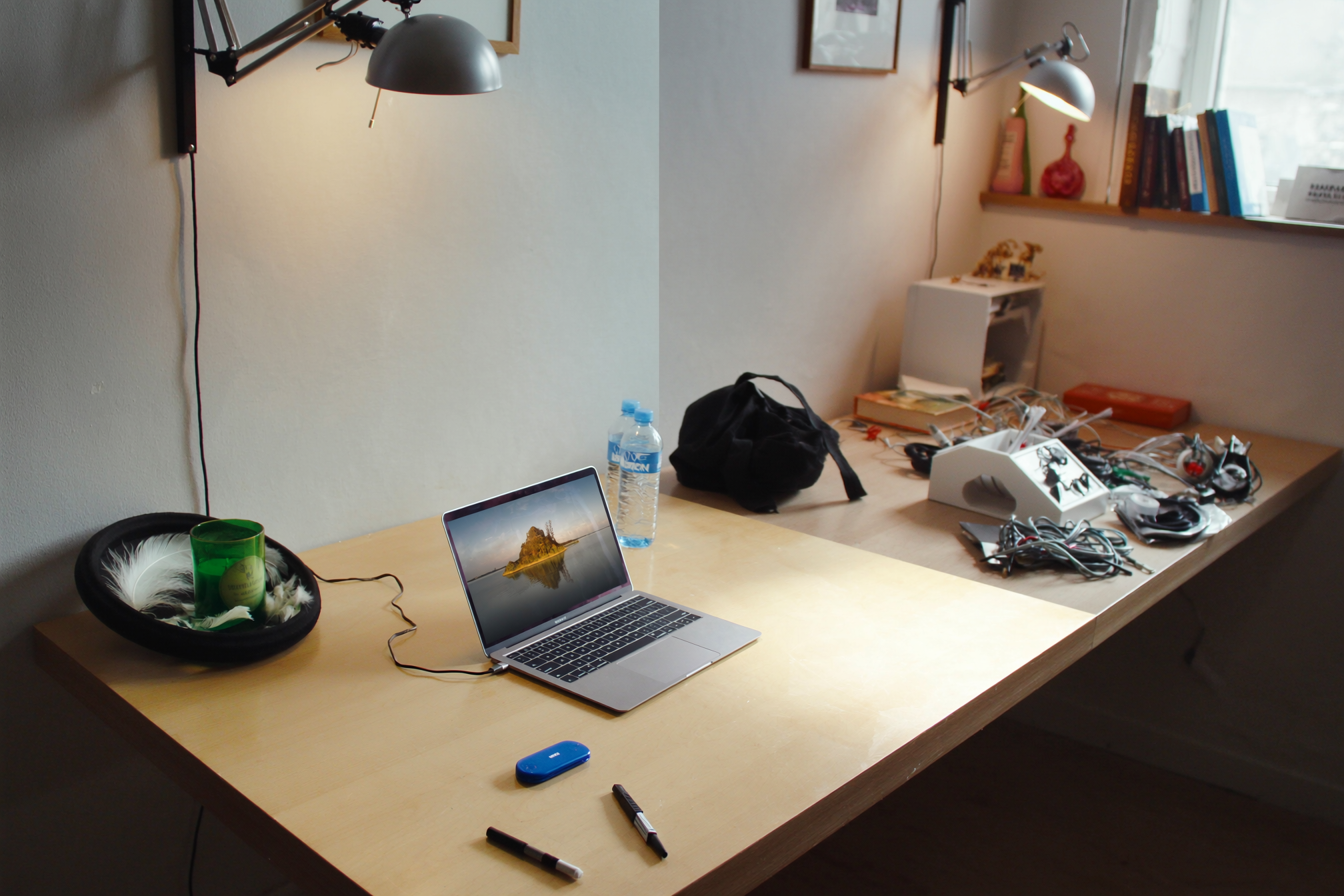
    Small desk being organized to reduce clutter

    Go vertical before you go wider

    When desk surface is limited, the fastest way to reclaim space is to move things off the desktop entirely and onto the wall or a vertical riser. Pegboards, wall-mounted shelves, and monitor stands with built-in storage underneath all free up desk area without needing more floor space.

    Cut down to what you touch daily

    Small desks amplify the cost of keeping things “just in case” — an item you touch once a month is taking up space you need every day. Do a quick audit: anything not used in the past two weeks probably belongs in a drawer, on a shelf, or somewhere else entirely.

    Use the space under the desk, not just on it

    Under-desk drawer organizers, cable trays, and small clip-on bins use space that’s otherwise sitting empty. This is especially valuable on compact desks since it doesn’t compete with your limited desktop real estate at all.

    Drawer organizer reducing desk clutter

    Stack instead of spreading out

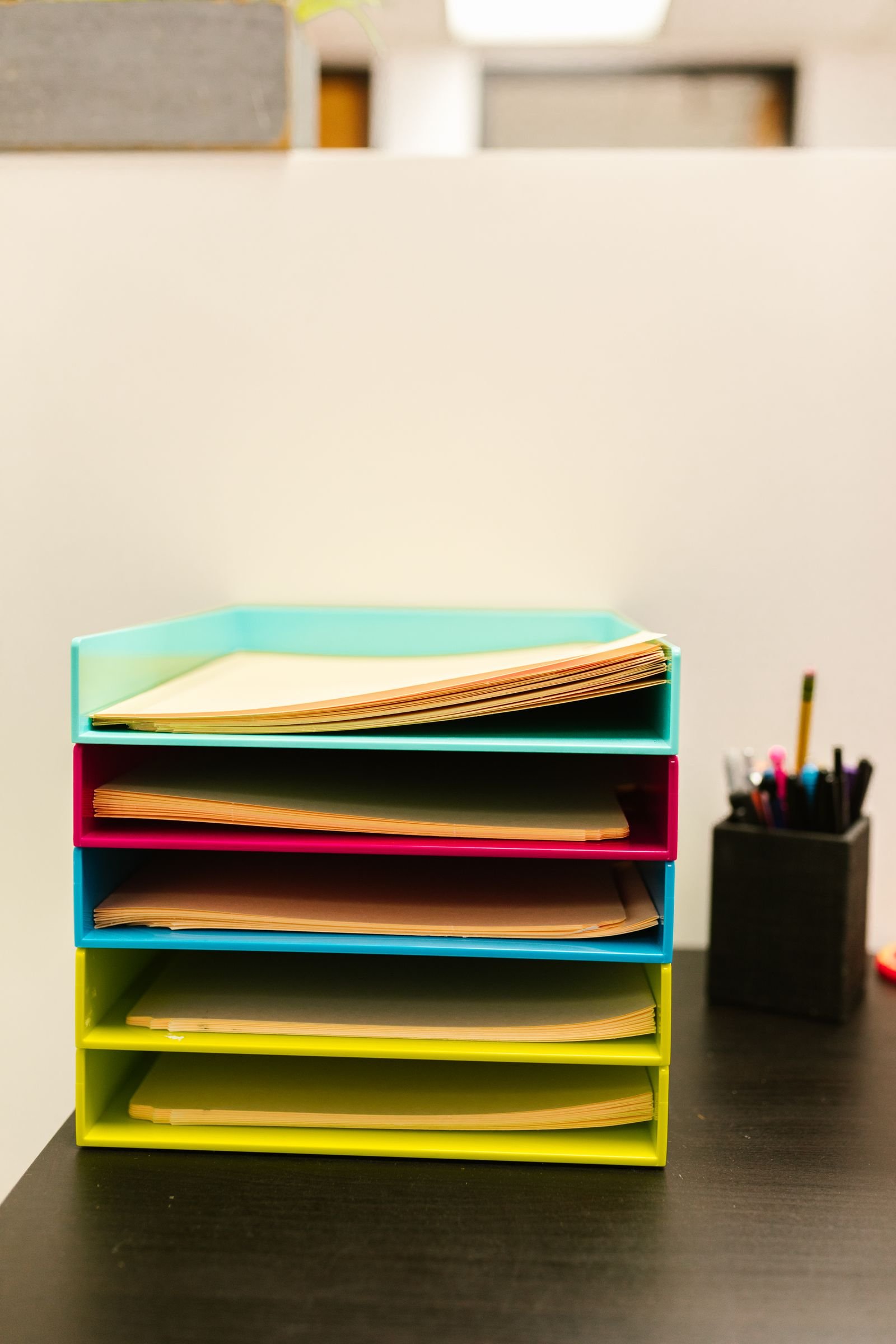
    A monitor riser with drawer space underneath, or stackable organizer trays, let you use vertical space on the desk itself rather than spreading items across the whole surface. This matters more on a small desk, where spreading items out eats into your working area almost immediately.

    Cable clutter counts as visual clutter

    On a small desk, loose cables are more visually dominant simply because there’s less other surface to distract from them. Cleaning up cable routing often makes a compact desk look noticeably less cluttered even if you haven’t removed a single item from the desktop.

    Cable tray keeping small desk tidy

    Bottom line

    On a small desk, moving things off the surface — up onto the wall, down under the desk, or into drawers — matters more than any single organizer product. Solve the space problem in three dimensions, not just across the desktop.

  • How Much Desk Storage Do You Really Need? (By Work Type)

    How Much Desk Storage Do You Really Need? (By Work Type)

    This post contains affiliate links. If you buy through these links, we may earn a commission at no extra cost to you.

    Desk storage needs vary a lot more by job type than most buying guides admit. Someone doing video calls all day has almost nothing to store; someone doing paperwork or physical craft work needs real drawer space. Here’s a more realistic way to think about it based on how you actually work.

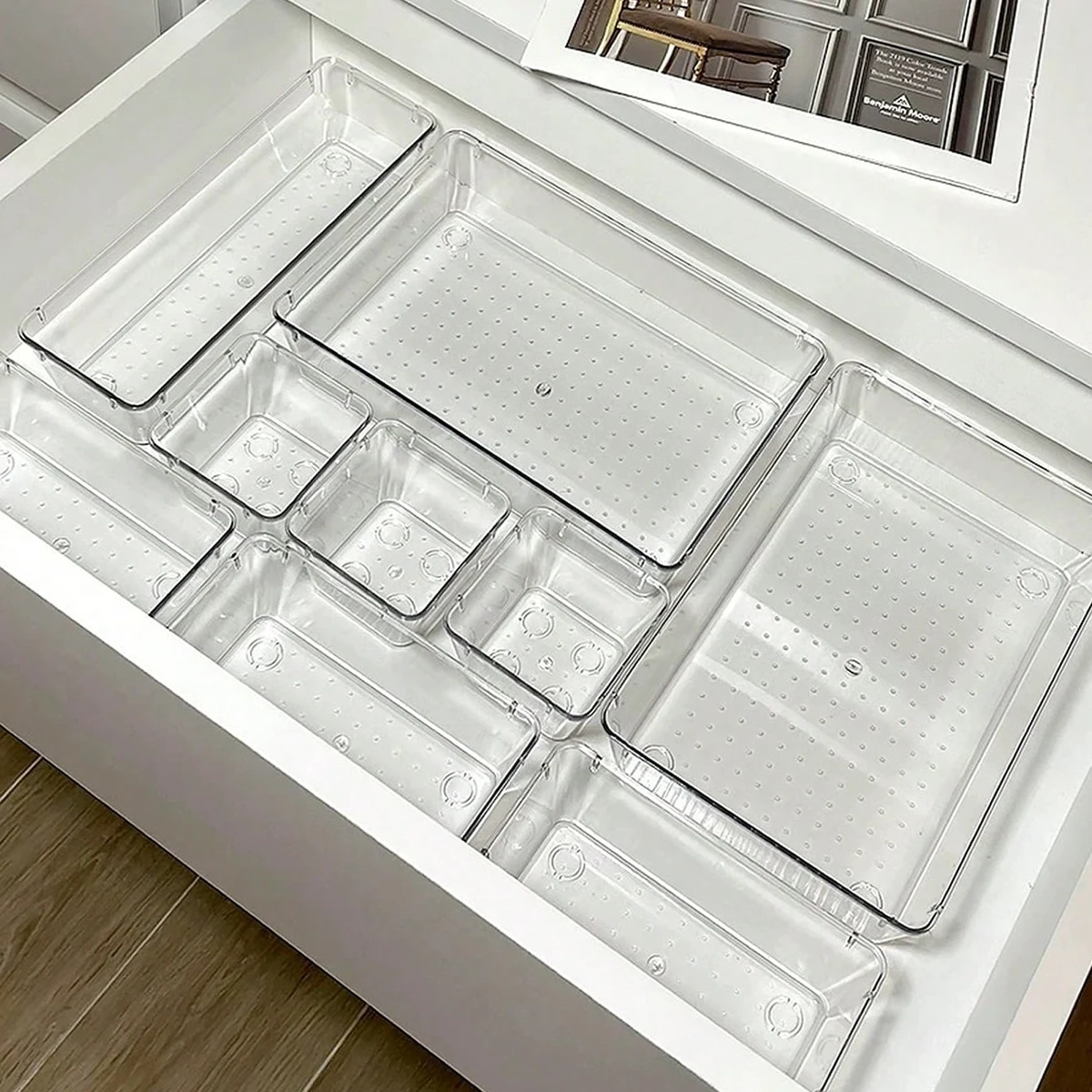
    7-piece drawer organizer set

    Remote meetings and computer-only work

    If your job is almost entirely on-screen — calls, documents, spreadsheets — your storage needs are genuinely small: a place for a notebook, a charger, and maybe a water bottle. Over-buying storage in this case usually just creates empty drawers that become junk collectors. A single small tray or a slim drawer unit is usually enough.

    Hybrid work with occasional paper

    If you deal with printed documents, mail, or the occasional physical file, you need at least one drawer with hanging file capacity or a document tray, even if you’re mostly paperless day to day. The mistake here is assuming “mostly digital” means “no storage needed” — the occasional physical item still needs a home, or it ends up as a stack on the desk surface.

    Creative and craft work

    Design, writing with physical references, hobby work, or anything involving tools and materials needs the most storage of any category — multiple drawer levels or a cart, ideally sorted by project or material type rather than one catch-all drawer. Open trays tend to fail here because craft supplies multiply quickly and clutter the desktop instead of staying contained.

    Under-desk drawer organizer in use

    Gaming and multi-device setups

    If your desk supports several devices — a PC, a console, peripherals, controllers — the priority shifts from paper storage to cable and accessory storage. A drawer for controllers and cables plus a stand or hooks for headsets usually covers this better than traditional document-focused organizers.

    The general rule

    Storage should match what physically accumulates on your desk in a normal week, not what a generic “complete desk setup” checklist suggests. Track what actually piles up on your desk surface for a week before buying anything — that pile is a more accurate shopping list than any general guide, including this one.

    Example pick: the same 7-piece drawer organizer set works well for most of the hybrid-work and creative-work categories above. (affiliate link)

    Organizer sorted by item type

    Bottom line

    Under-buying storage means clutter; over-buying means empty drawers and wasted desk footprint. Matching storage to your actual work type, rather than a one-size-fits-all setup, is what keeps a desk both functional and uncluttered long term.

  • Desk Organizer Types Explained: Trays, Drawers, and Risers

    Desk Organizer Types Explained: Trays, Drawers, and Risers

    This post contains affiliate links. If you buy through these links, we may earn a commission at no extra cost to you.

    “Desk organizer” covers a wide range of products that solve very different problems, and buying the wrong type is a common reason organizers end up unused in a drawer themselves. Here’s how the main categories differ and which one actually fits your situation.

    Hidden under-desk drawer organizer

    Trays: for things you touch constantly

    A desk tray — usually a shallow, open compartment or a set of them — is meant for items you reach for multiple times a day: pens, sticky notes, a phone, small tools. Because trays are open, they only work well if you’re willing to keep them tidy; anything open tends to become a catch-all if you’re not intentional about what goes in it. Trays are the right choice when speed of access matters more than tidiness.

    Drawer organizers: for things you want out of sight

    Under-desk or attached drawer units add closed storage without taking up desktop surface area, which makes them the better option for anything you don’t need to see or reach constantly — chargers, cables you’re not using, documents, spare stationery. The main tradeoff is a small delay: opening a drawer takes a second longer than reaching for an open tray, which matters if you’re organizing items you use often.

    Monitor risers: dual-purpose storage

    A monitor riser lifts your screen to a more comfortable eye level while creating a storage gap underneath — often enough room for a keyboard, notebook, or small tray. This makes risers useful less as “organizers” in the traditional sense and more as a way to reclaim desk space that would otherwise sit empty under a monitor that’s already at the right height.

    Drawer organizer with small items

    Pegboards and wall-mounted organizers

    If desktop space is the real constraint, moving storage off the desk entirely with a pegboard or wall-mounted organizer can free up more usable surface area than any desktop tray or drawer. This works best for items that don’t need to be touched multiple times per hour, since reaching to a wall panel takes slightly more effort than reaching across a desk.

    How to actually choose

    Sort what’s currently cluttering your desk into two piles: things you use several times a day, and things you use occasionally but still want nearby. The first pile belongs in a tray or an easily reachable spot; the second pile belongs in a drawer, riser storage gap, or wall organizer. Buying one organizer type and expecting it to handle both categories is usually why organizers stop getting used within a few weeks.

    Example picks: a 7-piece drawer organizer set for the drawer category above, or a no-drill under-desk hidden organizer if you want extra storage without giving up drawer space. (affiliate link)

    Drawer organizer with pens and tools

    Bottom line

    There’s no single best desk organizer — there’s only a best fit for how often you touch a given item. Match access frequency to storage type first, and the specific product you buy matters much less.