Most desk setups aren’t wrong in one dramatic way — they’re wrong in a handful of small ways that add up to daily discomfort. Here are the ones that show up most often.
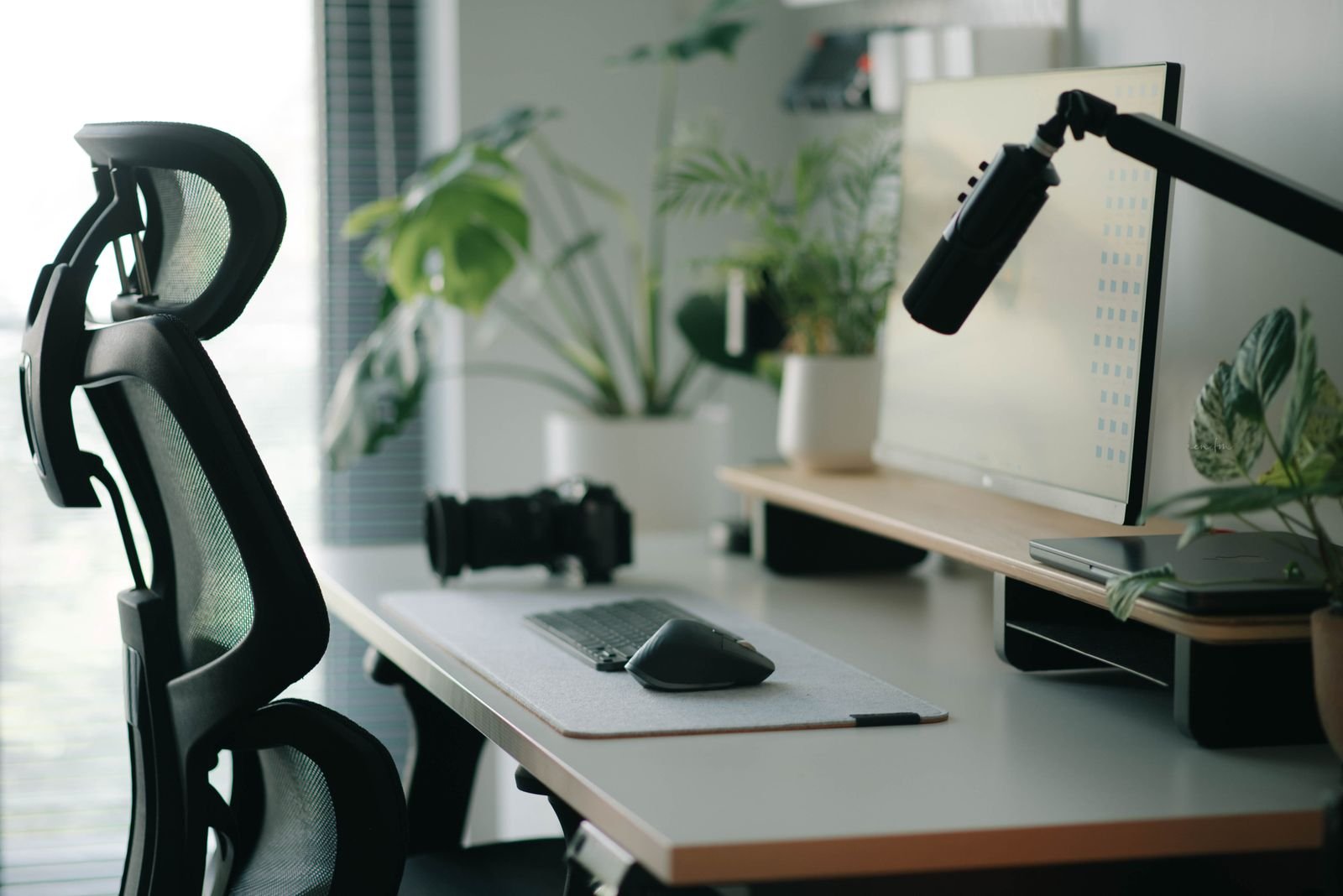
Monitor height set by the stand, not your eyes
The default height of whatever stand your monitor came with is rarely correct for your actual sitting height. The top of the screen should sit at or slightly below eye level; if you’re tilting your chin up or down to read it comfortably, the monitor is at the wrong height, not you.
Keyboard and mouse too far from your body
Desks that are deeper than they need to be often end up with the keyboard pushed toward the back edge, forcing your arms to reach forward for hours at a time. Pull the keyboard and mouse close enough that your elbows can stay near your sides — use the freed-up desk depth behind them for a monitor arm or storage instead.
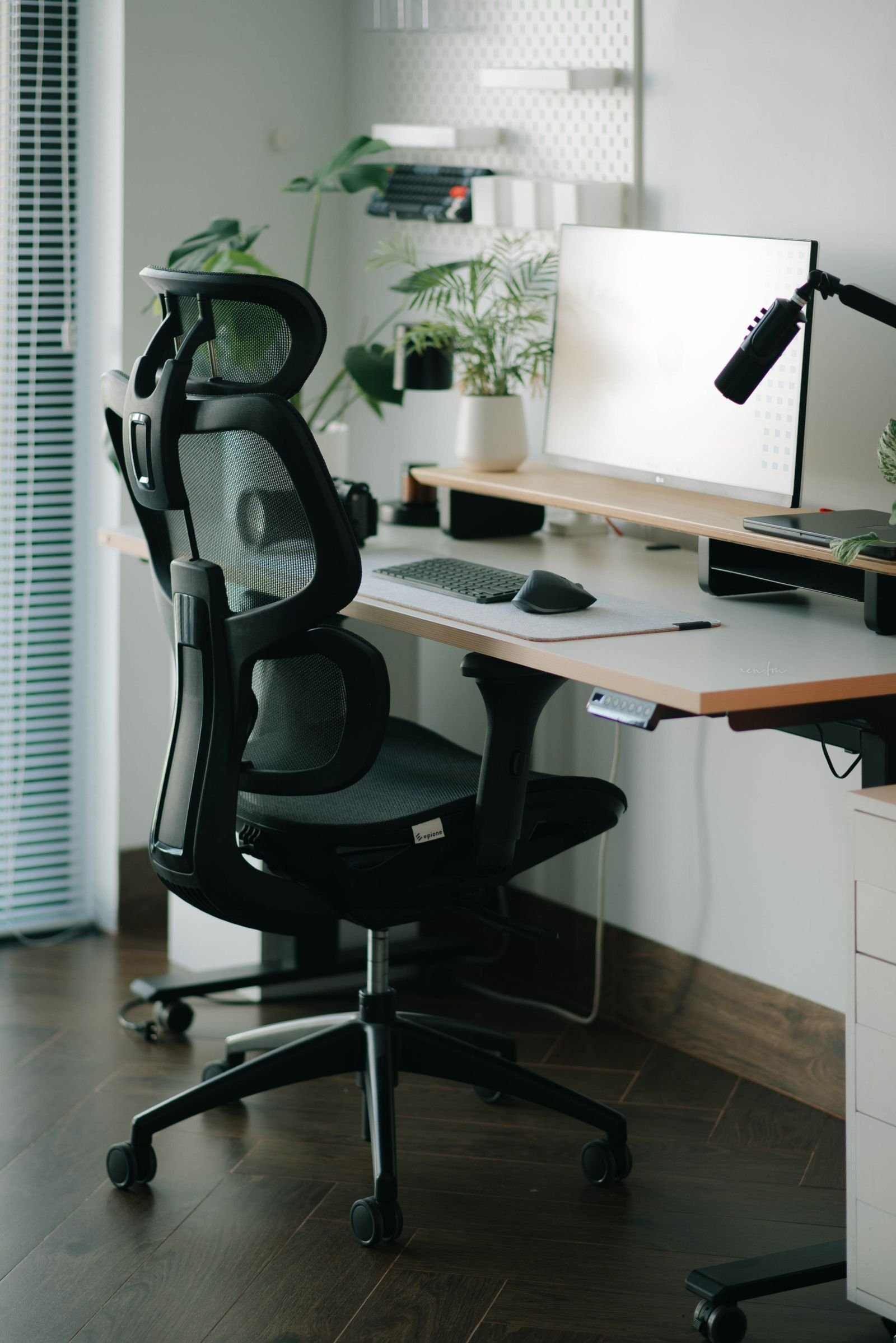
Cables treated as an afterthought
Cable management usually gets addressed last, after everything else is already in place, which is exactly why it never quite gets fixed. Plan a cable path — usually down one leg to a single point — before you finalize where everything sits, not after.
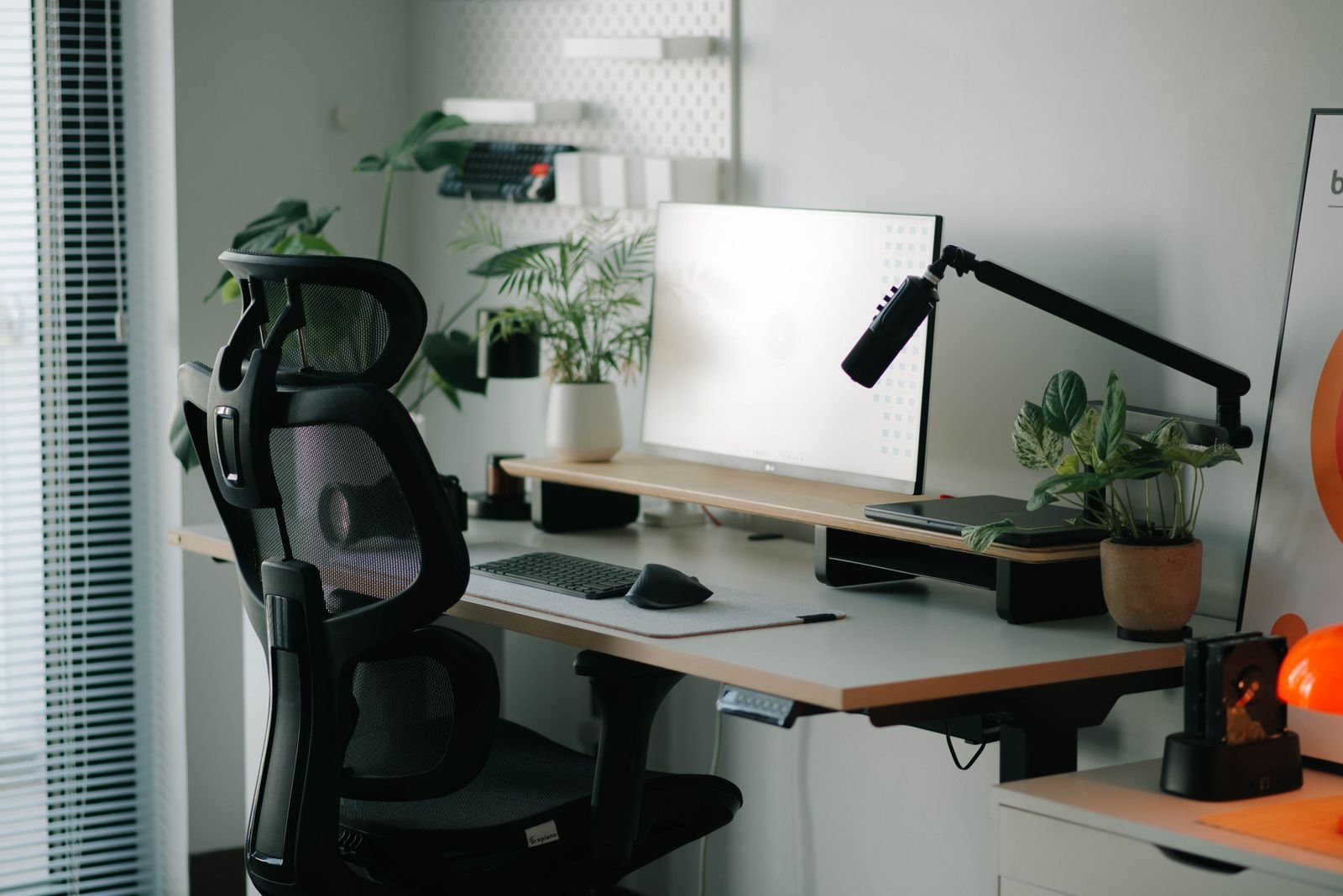
Lighting that fights your monitor instead of helping it
A desk lamp aimed at the same spot your eyes are already focused on creates glare, not clarity. Light should fall on your keyboard and desk surface, not directly into your eyeline or onto the screen itself — and a window or overhead light directly behind your monitor will wash out the display no matter how good the lamp is.
Leave a Reply