
This post contains affiliate links. If you buy through these links, we may earn a commission at no extra cost to you.
Desk drawers turn into chaotic junk piles fast. Pens mix with cables, sticky notes vanish under notebooks, and that USB drive you need right now is buried somewhere in the back. Drawer dividers solve this by creating dedicated zones, but the type of divider you choose changes how flexible and effective your organization actually is.
Fixed, adjustable, and modular dividers each work differently. Here’s how to pick the right system based on what you store and how often your drawer contents change.
Fixed Dividers: Pre-Sized Compartments
Fixed dividers come as single-piece trays with permanent compartments. You drop them in your drawer and fill the slots.
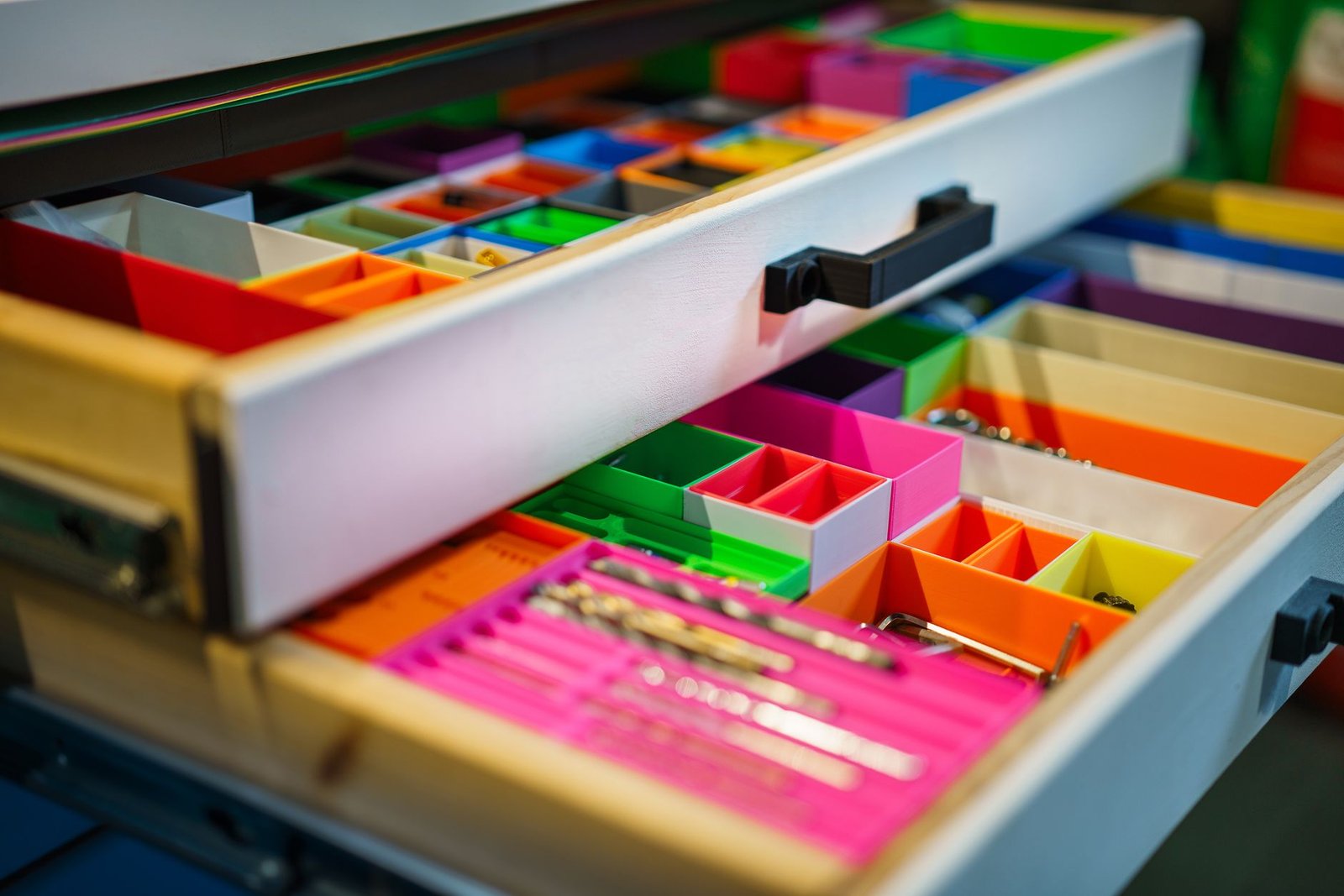
- Best for: Stable drawer contents that don’t change—standard office supplies like pens, paper clips, sticky notes, and staplers.
- Sizing: Measure your drawer dimensions carefully before buying. Fixed trays won’t adapt if you’re off by an inch.
- Price: Usually the cheapest option, ranging from $8–$20 for basic plastic or bamboo trays.
- Durability: Solid construction since there are no moving parts or connectors to break.
- Limitation: Zero flexibility. If you need to store something wider or taller than the compartments allow, you’re stuck.
Based on buyer reviews, fixed trays work well in dedicated supply drawers but fail when your storage needs shift—like when you add new gadgets or change your workflow. A smart desk gadgets checklist can help you anticipate what you’ll need space for.

Adjustable Dividers: Spring-Loaded or Expandable Panels
Adjustable dividers use spring tension or expandable rails to fit different drawer widths. You position the dividers where you want them, and they lock in place with friction or tension clips.
- Best for: Drawers where you need custom compartment sizes but don’t rearrange often—like separating charging cables from notepads.
- Sizing: Most expand from 11 to 17 inches, covering standard desk drawer widths. Check your drawer depth, too.
- Price: Mid-range, typically $12–$25 for a set of 4–6 dividers.
- Durability: Spring mechanisms can weaken over time, especially with frequent repositioning.
- Limitation: You’re still working with straight lines. Odd-shaped items like headphones or power bricks don’t fit neatly.
Published specs show adjustable dividers handle light-to-medium weight items well but can shift if you slam the drawer repeatedly. They’re a good middle ground if your drawer contents are mostly uniform in size.
Modular Dividers: Interlocking Grid Systems
Modular systems let you arrange individual compartments or bins however you want. Pieces snap together, stack, or interlock to create a custom layout.
- Best for: Mixed storage needs—cables, adapters, small tools, accessories, and office supplies in one drawer.
- Sizing: Most modular sets include multiple bin sizes (small, medium, large) that you combine to fit your drawer.
- Price: Higher upfront cost, usually $18–$35 for a starter set, but you can expand with add-on bins.
- Durability: Quality varies. Look for thick plastic or bamboo with solid connectors, not flimsy interlocking tabs.
- Limitation: Setup takes longer initially, and cheaper sets can feel fragile.
Customer feedback highlights modular dividers as the best choice for tech-heavy desks or setups that evolve over time. If you’re following minimalist desk setup ideas, modular systems let you scale down or reconfigure as you declutter.
A 7-piece drawer organizer set (affiliate link) with adjustable compartments offers a practical starting point for most desk drawers.
Which One Should You Choose?
- Go fixed if your drawer holds the same supplies every day and you want the cheapest, fastest solution.
- Go adjustable if you need some customization but your items are mostly standard-sized.
- Go modular if you store varied items, add new gadgets frequently, or want the flexibility to reorganize as your needs change.
For small spaces or compact setups, modular dividers maximize every inch without locking you into a fixed layout. For larger drawers in stable office environments, fixed trays get the job done with less upfront planning.
Leave a Reply