Heads up: some links in this post are affiliate links, which means we may earn a small commission if you make a purchase — at no extra cost to you.
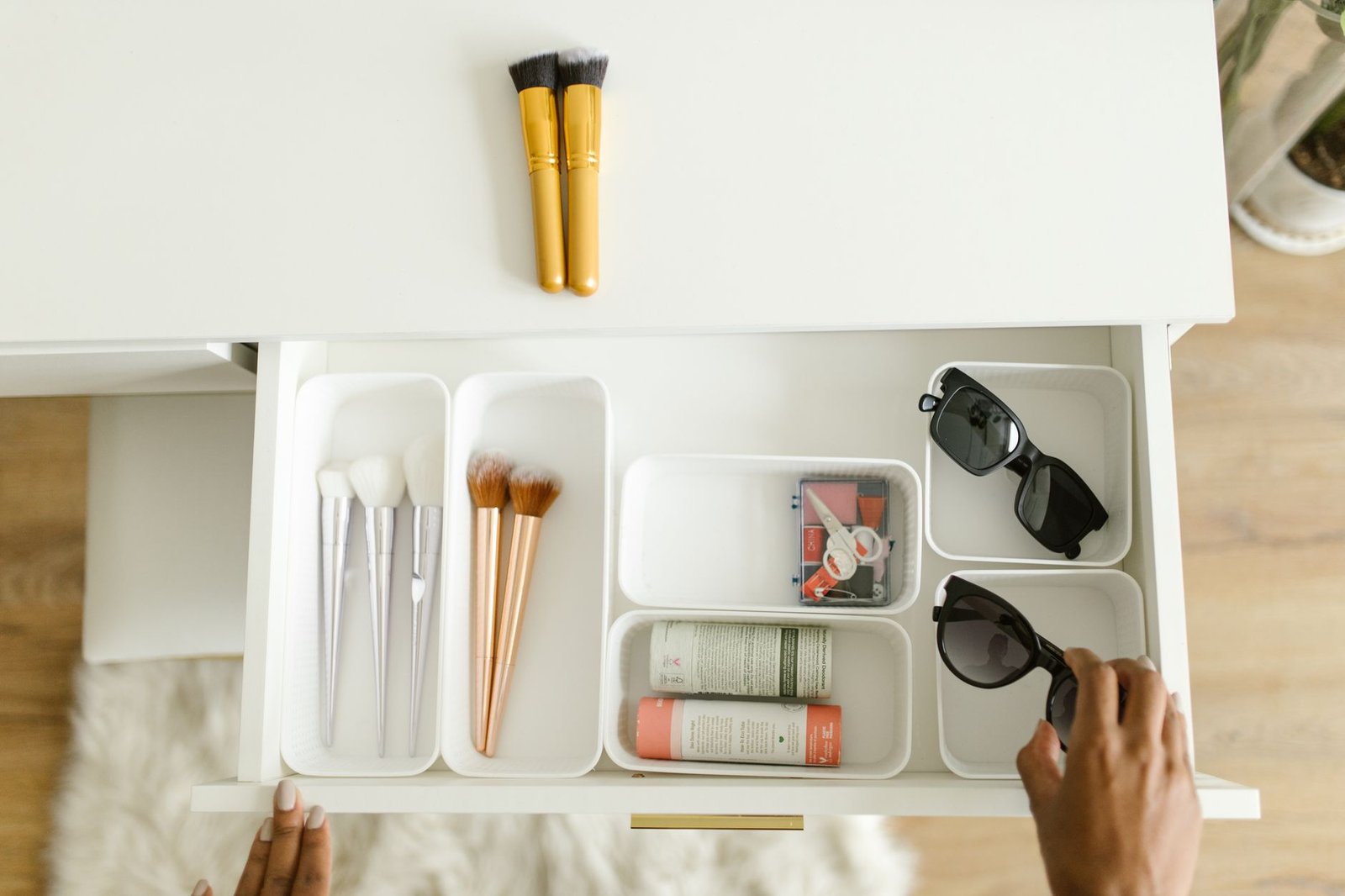
When you’re working with a small desk that has only one or two shallow drawers, every square inch counts. Poor drawer organization means wasted space, constant hunting for supplies, and the frustration of items sliding around or getting buried. The right setup maximizes what little storage you have and keeps essential items accessible without overflowing onto your desktop.
Based on published specifications and customer feedback, here’s how to organize small desk drawers effectively when space is at a premium.
Small Desk Drawer Organization Checklist

- Measure your drawer interior first. Before buying any organizer, measure the usable width, depth, and height inside the drawer—not the exterior dimensions. Many compact desks have drawers that are narrower or shallower than they appear, and standard organizers won’t fit.
- Use adjustable or modular dividers instead of fixed trays. A modular drawer organizer lets you reconfigure compartments as your needs change. Fixed single-purpose trays waste space in small drawers because they can’t adapt to oddly shaped items or changing supplies.
- Store only daily-use items in the drawer. Small drawers should hold what you reach for multiple times per day: pens, sticky notes, a stapler, scissors, charging cables. Archive supplies, reference materials, and occasional-use items belong elsewhere. For guidance on what stays accessible versus stored away, check out this desktop file organization checklist.
- Keep one writing instrument type, not a collection. A small drawer can’t accommodate fifteen pens. Keep two or three favorites and relocate or discard the rest. The same goes for highlighters, markers, and mechanical pencils—curate down to what you actually use.
- Use vertical stacking only for flat items. Stacking sticky note pads or small notecards works in shallow drawers. Stacking bulky items like tape dispensers or staplers creates a Jenga tower that collapses every time you open the drawer.
- Assign one small container for miscellaneous items. Paper clips, binder clips, thumb tacks, and rubber bands all go into a single small compartment. Without a dedicated “misc” zone, these tiny items scatter and clog the drawer.
- Store charging cables with velcro ties, not loose. Loose cables tangle and fill more space than necessary. Roll each cable, secure it with a small velcro tie, and stand them upright in a narrow compartment. This approach works well even in drawers less than two inches deep.
- Consider a 7-piece drawer organizer set for maximum compartmentalization. If your drawer measures at least 12 inches wide, a 7-piece drawer organizer set (affiliate link) offers multiple interlocking trays that fit together like puzzle pieces, giving you dedicated zones for pens, clips, sticky notes, and other small supplies without wasted gaps.
- Leave at least 10% empty space. A crammed drawer is hard to open, items get stuck, and you can’t add anything new. Aim for visible breathing room so the drawer slides smoothly and items don’t jam against the top.
- Skip drawer liners in very small drawers. Liners reduce usable depth and can shift around, making organizers sit unevenly. If you’re working with a shallow drawer under two inches deep, the liner material eats into critical vertical space.
- Rotate seasonal or project-based supplies out. If you’re working on a project that requires specific tools—labels, a hole punch, specialty pens—store them in the drawer only while the project is active. When it’s done, move those items to secondary storage and reclaim the space.
- Audit your drawer monthly. Small drawers accumulate clutter faster than large ones. Set a recurring calendar reminder to pull everything out, discard dried-up pens or expired supplies, and reset the organization.
What Not to Store in a Small Desk Drawer
Bulky items like full-size tape dispensers, large staplers, and box cutters take up disproportionate space. So do reference documents, manuals, and files—those belong in a file box or wall-mounted storage. Snacks, personal care items, and electronics (other than small charging cables) also don’t belong in a workspace drawer meant for daily task supplies.
When your desk has limited built-in storage, being selective about what earns a spot in the drawer is the only way to keep it functional. Focus on high-frequency tools, use modular organizers that adapt to your specific needs, and audit regularly to prevent clutter from creeping back in.
Leave a Reply