This article includes affiliate links. We may earn a commission on qualifying purchases, at no additional cost to you.
A desk drawer can either be a strategic storage system or a chaotic junk pile. The difference comes down to intentional placement—knowing what belongs in which drawer and how to keep categories separate. This checklist walks through how to organize your desk drawers by function, so you can find what you need without digging.
Most desks come with two to four drawers of varying depths. The goal is to match item type, frequency of use, and drawer size so everything has a dedicated spot. Based on published ergonomic guidelines and common home-office workflow patterns, here’s how to organize each drawer.
Top Drawer: High-Frequency Essentials
Your top drawer should hold items you reach for multiple times per day. This is prime real estate—shallow, close to your hands, and easiest to access without leaning or standing.

- Writing tools: Keep three to five pens/pencils you actually use, not the dozen freebies from conferences.
- Sticky notes and small notepads: Place near the front edge for quick grabs during calls.
- Paper clips and binder clips: Use a small container or tray compartment to prevent scatter.
- USB drives and SD cards: Store in a dedicated section; these are easy to lose in clutter.
- Headphones or earbuds: If you use them daily, keep them in the top drawer rather than tangled on your desk.
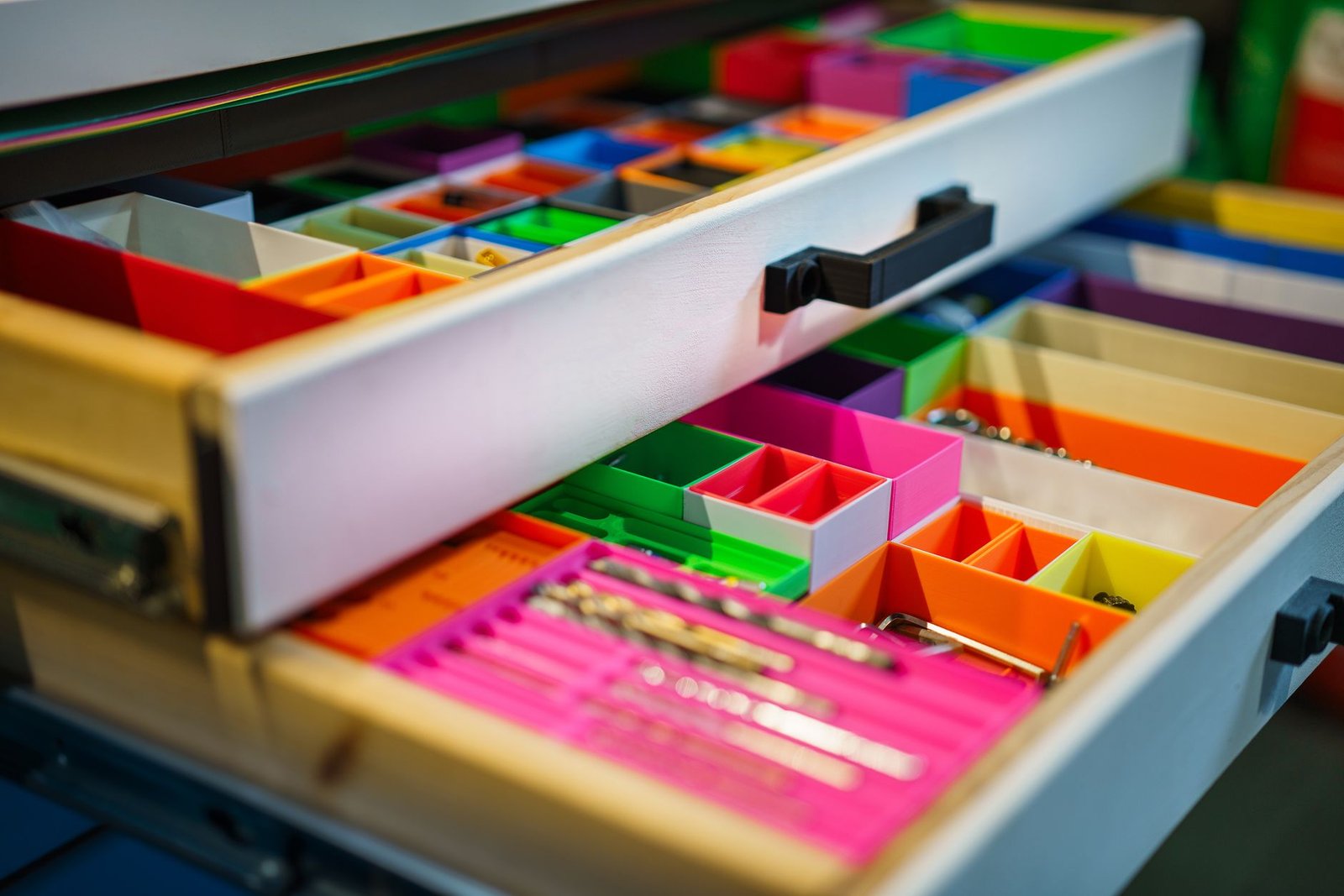
A 7-piece drawer organizer set (affiliate link) can divide this drawer into fixed zones, preventing the slow creep of miscellaneous items.
Middle Drawer: Stationery and Supplies
The middle drawer typically has more depth and should house less-frequent supplies that still support your daily work.
- Extra notebooks and legal pads: Stack vertically if the drawer is deep enough.
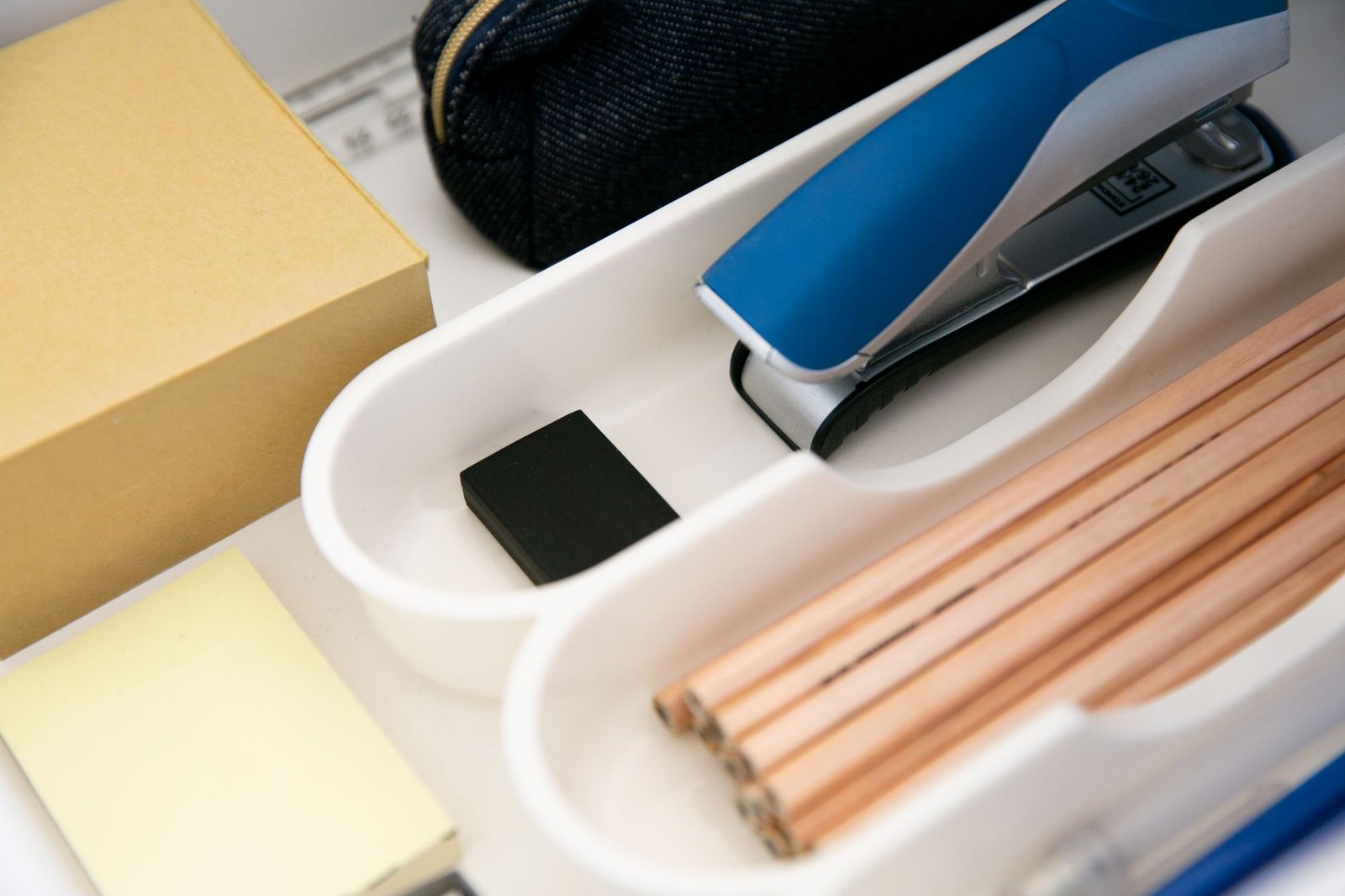
- Tape, stapler, and scissors: Keep these together in one section; they’re used occasionally but need to be findable fast.
- Charging cables you swap regularly: Lightning, USB-C, or micro-USB cables you cycle through devices.
- Stamps, envelopes, and return labels: Useful for home-office invoicing or returns.
- Business cards: Store in a small box or cardholder to avoid bending.
If you’re working with limited drawer space, check out minimalist desk setup ideas for tips on reducing what you keep on hand.
Bottom Drawer: Archival and Overflow
The deepest drawer is best for items you need monthly or less, plus bulkier supplies.
- Manuals and warranties: Keep product documentation for your desk gear in a labeled folder.
- Old notebooks or project files: Archive completed work you might reference later.
- Extra power adapters and backup cables: Store coiled with velcro ties to prevent tangles.
- Seasonal items: Desk fan in winter, portable heater manual in summer.
- Office supplies in bulk: Extra pens, notepads, or sticky note packs you haven’t opened yet.
File Drawer (If Available): Documents Only
If your desk includes a file drawer with hanging rails, reserve it exclusively for paper files.
- Active project folders: Keep current client work, contracts, or reference sheets within reach.
- Tax documents and receipts: Use labeled folders by year or category.
- Instruction sheets: Printouts for software workflows or device setup steps.
- Printed invoices or statements: Anything you need in hard copy for record-keeping.
For tips on clearing visible clutter before organizing drawers, see our guide on common cable management mistakes.
What Doesn’t Belong in Desk Drawers
Some items create mess or waste prime drawer space:
- Food wrappers or snacks: These attract pests and create odors.
- Dead batteries or broken electronics: Recycle or dispose of these properly.
- Duplicate tools: You don’t need four staplers or ten highlighters.
- Unread mail or random receipts: Process or file these, don’t just stash them.
Organizing by drawer function keeps your workspace efficient and reduces the time spent hunting for basics. Define zones, stick to categories, and revisit the system every few months to prevent drift.
Leave a Reply