
This post contains affiliate links. If you buy through these links, we may earn a commission at no extra cost to you.
A monitor arm looks like a simple accessory until you actually try to buy one. Between VESA standards, weight ratings, clamp types, and arm mechanisms, it’s easy to end up with something that either can’t hold your screen or won’t fit your desk at all. Here’s what actually matters before you buy.
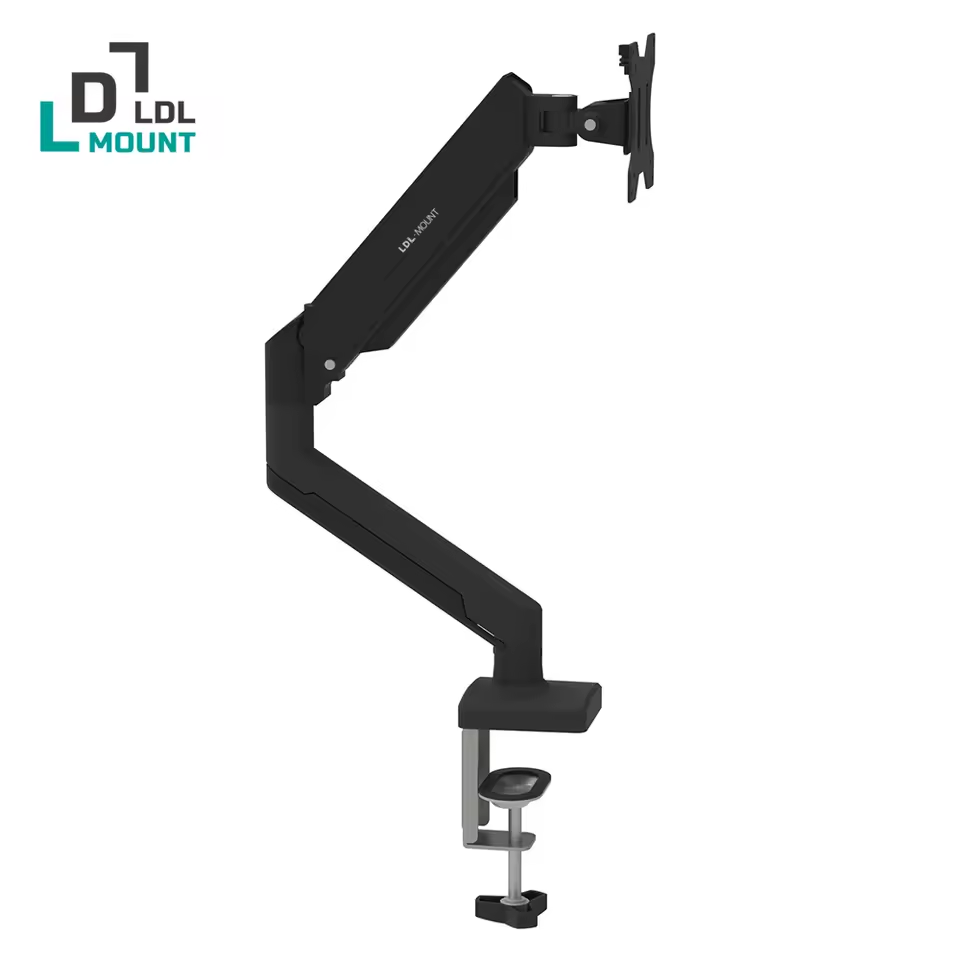
Measure your desk edge first
Most monitor arms mount with a clamp that grips the back edge of your desk, and clamps have a maximum thickness they can grip — usually somewhere between 1.5 and 3.5 inches. Glass desks, very thick executive desks, and desks with a lip or trim can all cause fit problems. If your desk has an open back edge with no bracing underneath, a clamp mount will work fine. If it doesn’t, you’ll need a grommet mount instead, which goes through a drilled hole in the desktop.
Check VESA compatibility
Almost every monitor sold in the last decade has a VESA mounting pattern on the back — usually 75x75mm or 100x100mm for standard monitors, with wider patterns for ultrawide and larger screens. Check your monitor’s spec sheet for its VESA size before buying an arm, since not every arm supports both patterns out of the box.
Match the weight rating to your actual monitor
Every arm lists a weight range it can support, and gas-spring arms in particular need the monitor weight to fall within that range to move smoothly. Too light and the arm may drift upward on its own; too heavy and it will sag or refuse to hold position. If you plan to upgrade to a bigger monitor later, it’s worth buying an arm rated for more weight than you currently need.
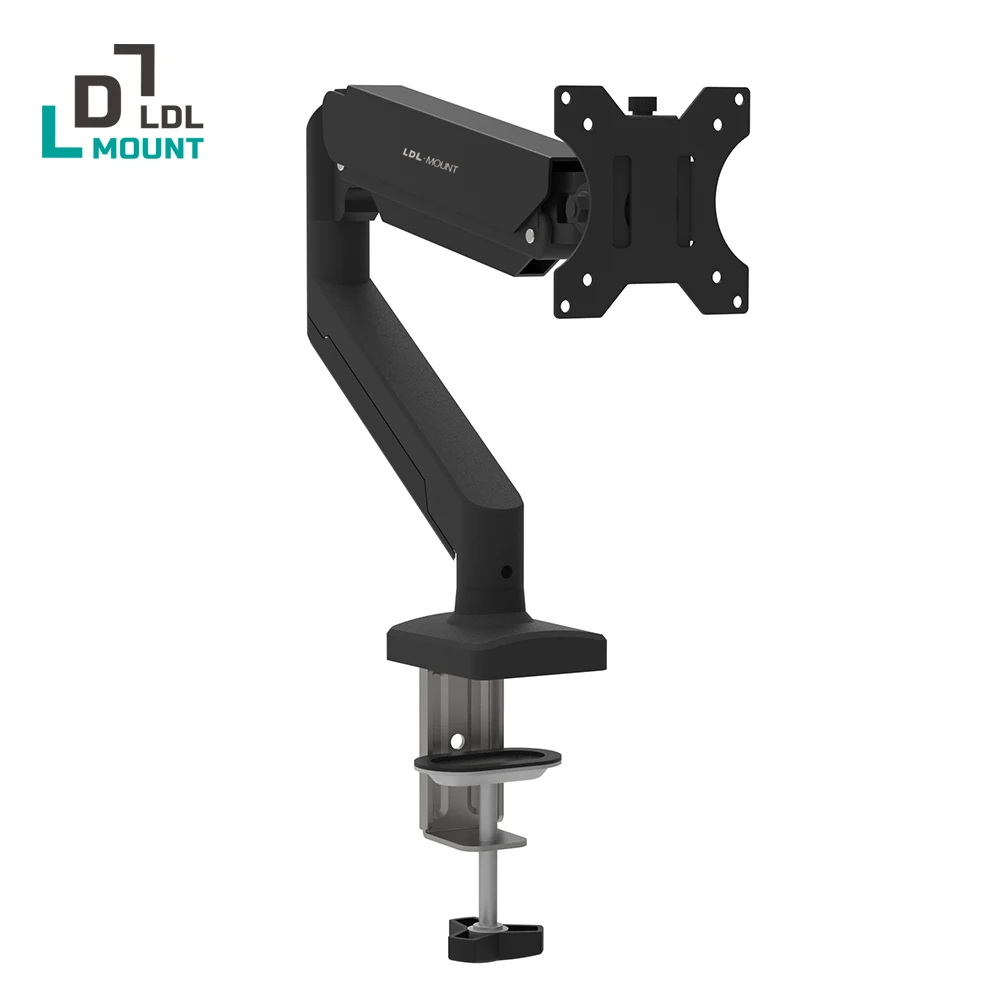
Gas spring vs friction arm
Gas spring arms let you adjust height and angle with one hand and very little resistance, which is nice if you switch between sitting and standing often. Friction arms rely on tightened joints instead of a gas cylinder — they’re usually cheaper and hold position well once set, but adjusting them takes a bit more effort each time. If you rarely reposition your monitor once it’s set up, a friction arm is often the better value.
Think about range of motion, not just height
A good arm should let you pull the monitor closer or push it back, tilt it up or down, swivel it side to side, and rotate it into portrait mode if you want. Cheaper arms sometimes skip depth adjustment (extending forward and back), which matters more than people expect once the monitor is actually mounted — you’ll often want it slightly closer than you’d guess.
Single vs dual clamp base
If you’re running two monitors, decide early whether you want one dual arm on a shared base or two separate single arms. A shared base saves desk space but means both monitors move somewhat together; two independent arms give each screen full freedom of movement at the cost of an extra clamp point on your desk.
Example pick: if you want a specific gas-spring arm to start with, the LDL-MOUNT Flex Fit single monitor arm covers the 17″-32″ range most people need. (affiliate link)

Bottom line
Before you add anything to your cart, confirm three things: your desk’s edge thickness and clearance underneath, your monitor’s VESA pattern, and your monitor’s weight versus the arm’s rated range. Get those three right and almost any reasonably built arm will serve you well for years.
Leave a Reply